

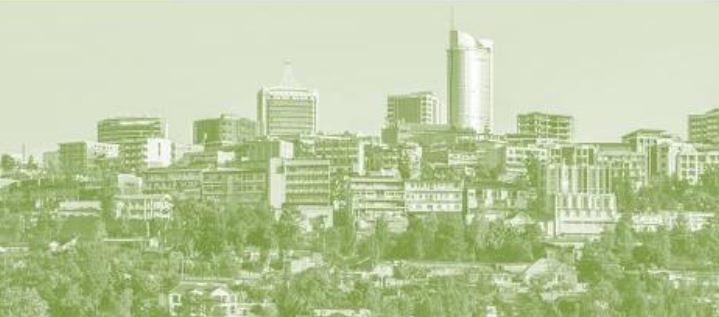
Rwanda’s minimum requirements for green building compliance
As Rwanda’s cities grow, the country faces an important question: How can we build more, while harming less? With a rising urban population and ambitious national development plans, the construction sector is booming. But with this growth comes the need to protect our environment, manage resources wisely, and ensure healthy spaces for people.
That’s where Rwanda’s Green Building Minimum Compliance System (GBMCS) comes in.
What is a Green Building?
Green building is defined differently by various users, but there is a consensual agreement on the
fact that it is an outcome of a design philosophy which focusses on increasing the efficiency of
resource use while reducing building impacts on human health and the environment during the
building life cycle
Why green building, and Why now?
Rwanda has set clear development goals: increase urbanization from 16.5% in 2012 to 35% by 2024, promote economic growth in secondary cities, and meet climate targets under the Paris Agreement. At the same time, buildings account for more than 60% of energy use in East African countries and contribute significantly to carbon emissions and water consumption.
Green building isn’t just a trend, it’s a necessity. It offers smarter, more efficient ways to design, build, and operate our spaces while reducing environmental harm.
According to the GBMCS, a green building:
- Reduces energy and water use
- Improves indoor air quality
- Uses locally available, sustainable materials
- Encourages natural ventilation and daylighting
- Promotes biodiversity and ecosystem health
It’s about building in a way that respects people, nature, and future generations.
What Is the Green Building Minimum Compliance System?
Launched in 2019 through Rwanda’s Official Gazette, the GBMCS is a set of sustainability requirements for certain new buildings. It applies to new Category 4 and 5 developments, which include:
- Commercial buildings (excluding warehouses and shops)
- Public institutions and administrative buildings
- Healthcare facilities
- Educational institutions (excluding student housing)
- Social, cultural, and assembly buildings
Residential buildings are not required to comply, but voluntary adoption is encouraged.
How the compliance system works
The GBMCS outlines five focus areas, known as modules. Within these modules are 29 performance indicators, each assigned a point value for compliance. Some are mandatory, while others are optional.
To comply, buildings must:
- Implement all mandatory indicators
- Reach a minimum score of 60 out of 190 points
Mandatory features you can’t skip
To meet the minimum requirements, a building must implement the following:
Module 1: Energy Efficiency
- Artificial Lighting Efficiency (5 pts): Lighting systems must meet baseline power density standards.
- Solar Hot Water Systems (5 pts): Buildings must supply 100% of hot water needs via solar heating, if daily use exceeds 100 liters.
Module 2: Water Efficiency
- Rainwater Harvesting (4 pts): 100% of roof runoff must be captured and stored.
- Efficient Plumbing Fixtures (3 pts): All fixtures must meet minimum water flow criteria (e.g., faucets: 4–6 LPM).
- Wastewater Treatment (6 pts): On-site treatment must meet national discharge standards.
Module 3: Environmental Protection
- Low-Impact Refrigerants – Zero ODP (2 pts): All refrigerants used must have zero Ozone Depletion Potential.
Module 4: Indoor Environmental Quality
- Fresh Air Supply (4 pts): All mechanically ventilated spaces must meet national fresh air rates.
- Thermal Comfort (2 pts): Buildings must maintain indoor temperature between 24–26°C and humidity below 65%.
- Noise Control (2 pts): Occupied spaces must meet ambient noise thresholds.
Module 5: Innovation & Accessibility
- Universally Accessible Building (9 pts): Design features must accommodate persons with disabilities and the elderly (e.g. ramps, accessible restrooms, tactile signage).
Scoring
| Module | Mandatory Points Required |
| Energy Efficiency | 10 pts |
| Water Efficiency | 13 pts |
| Environmental Protection | 2 pts |
| Indoor Environmental Quality | 8 pts |
| Accessibility | 9 pts |
| TOTAL MINIMUM | 42 pts + 18 optional = 60 pts |
To reach the minimum 60-point threshold, projects must add at least 18 points from optional indicators such as:
- Daylighting
- Renewable energy systems
- Sustainable concrete
- Greenery preservation
- Enhanced lighting systems
Examples of green building in Rwanda
Nobelia Office Tower – Kigali’s Flagship
It’s the country’s first Green Star-rated building, awarded a 6-Star Green Star SA-Rwanda – Office v1 Design rating for its shell and core.
This tower showcases Rwanda’s commitment to sustainable architecture through features like:
- Energy-efficient design that minimizes power consumption
- Rainwater harvesting and recycling systems
- Low-emission materials for healthier indoor air
- Sustainable transport options including bike racks and EV charging stations
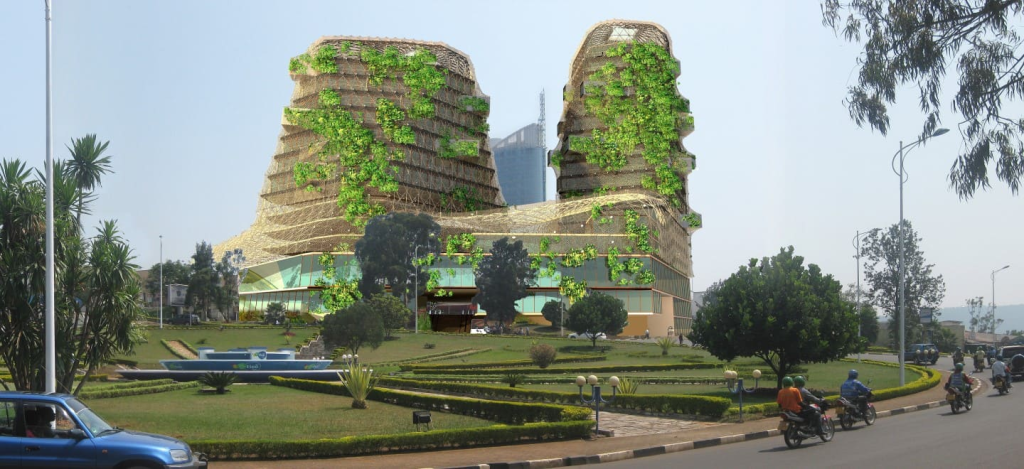
Nobelia Office Tower
Another Notable Example: I&M Bank Headquarters
The I&M Bank HQ in Kigali also exemplifies green building principles. It incorporates:
- Passive design strategies that leverage Rwanda’s upland climate
- Locally sourced sustainable materials
- Natural ventilation and daylighting
- Resilience to extreme weather events
These buildings reflect Rwanda’s broader push for climate-resilient infrastructure and align with its Green Building Minimum Compliance System (GBMCS), which became mandatory for Category 4 and 5 public buildings in 2023.
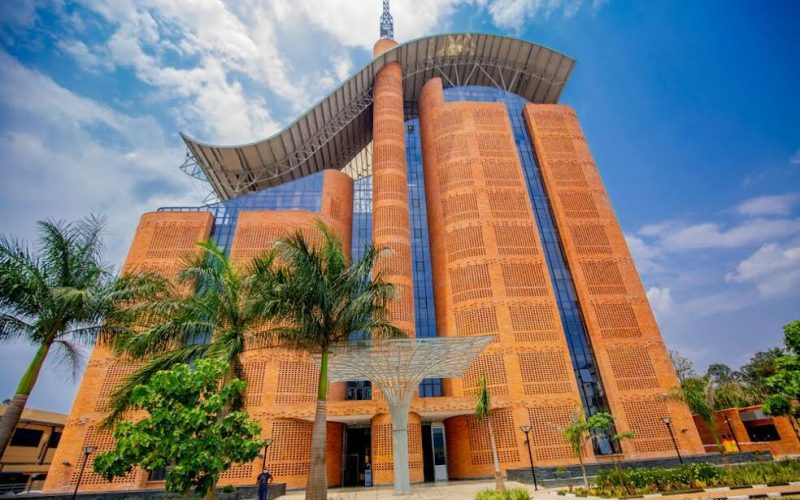
I&M Bank HQ in Kigali
Why this matters
Green building is about more than compliance. It’s about responsibility to our environment, our health, and our economy. By following the GBMCS, stakeholders contribute to:
- Achieving Rwanda’s Nationally Determined Contributions (NDCs) under the Paris Agreement
- Improving health and cognitive performance for building users
- Lowering utility costs for owners and tenants
- Promoting local green building industries and jobs
Whether you’re a property developer, architect, public official, or construction professional, your role is critical. Rwanda’s GBMCS provides a clear roadmap for greener, smarter buildings and the tools to make it happen.
If you’re starting a project and want help estimating your score or identifying optional strategies to boost your rating, there are resources and professionals ready to support you.
The green building movement in Rwanda is no longer optional, it’s the future. Let’s build it, together.
Download the attached document to learn more about the Green Building Minimum Compliance System (GBMCS).
Leave a Reply